How to verify someone's identity online: a complete guide
Google Lens, TinEye, Yandex Images, Social Catfish, and our free scam checker. A comprehensive toolkit to verify any online dating profile.
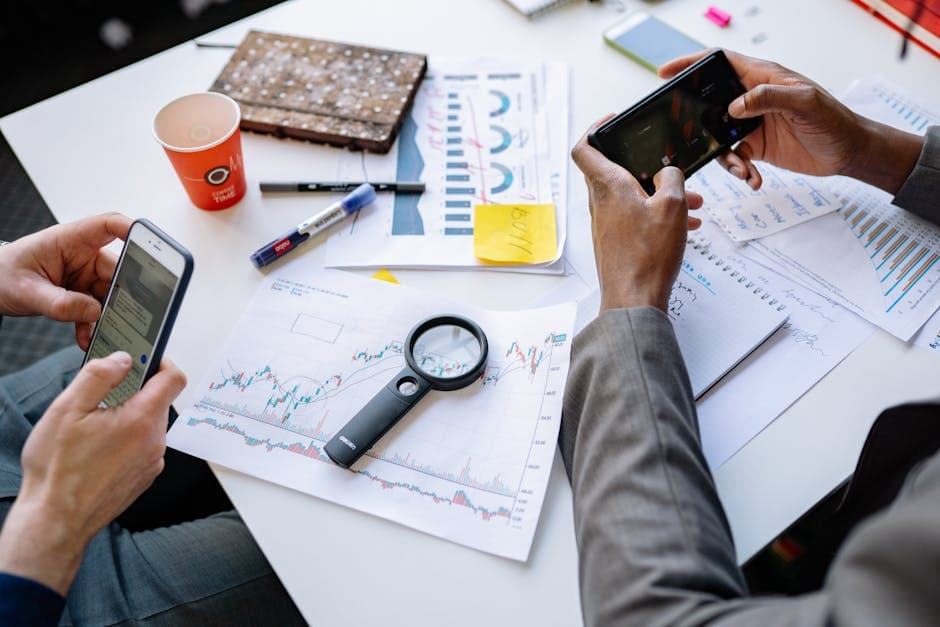
Five minutes of verification often save six months of manipulation. Reverse image search, profile-consistency analysis, video call demand: these free tools are within everyone's reach. What most people miss is the order in which to use them. This guide walks through the workflow that actually catches fakes.
— Valentin, from MoscowVerifying someone's identity before developing an online relationship is one of the most effective ways to protect yourself from romance scams. Scammers rely on victims taking their claims at face value — their profile photo, their name, their profession, their story. Systematic verification disrupts this process and exposes fraud before emotional attachment makes it harder to walk away.
This guide walks through every practical method available for verifying an online identity, from free tools anyone can use to paid services for deeper investigation.
Step 1: Reverse image search
Reverse image search is the single most effective free tool for detecting catfishing. It works by uploading a photo and finding other places on the internet where the same (or similar) image appears.
How to do it
- Save the photo. Download the person's profile photo(s) to your device. On most dating apps, you can screenshot the profile. On social media, right-click and "Save Image."
- Upload to Google Lens / Google Images. Go to images.google.com, click the camera icon, and upload the photo. Google will show visually similar images and pages where the image appears. This is effective for photos stolen from popular sources.
- Use TinEye. TinEye (tineye.com) is a dedicated reverse image search engine. Upload the photo and it will show every indexed instance of that exact image online, including modified versions (cropped, resized, filtered).
- Use Yandex Images. Yandex (yandex.com/images) is particularly effective for identifying photos sourced from Eastern European and Russian social media platforms (VKontakte, Odnoklassniki). It often finds matches that Google misses.
- Try multiple photos. Search every photo the person has shared with you, not just the main profile picture. Some photos may be sourced from different people's accounts.
What the results tell you
- The photo appears on a different person's social media: This is a strong indicator of catfishing. The scammer has stolen someone else's photos.
- The photo appears on a stock photo site: Definitive evidence of a fake profile.
- The photo appears in scam report databases: The same photos may have been reported by other victims on sites like romancescam.com or scamadviser.com.
- No results found: This does not automatically mean the person is real. AI-generated photos will not appear in reverse image search results because they have never existed before. Additionally, private photos shared in conversation may not be indexed by search engines.
Step 2: Check profile consistency
Cross-referencing the information in someone's dating profile against other online sources can reveal inconsistencies that point to fraud.
What to cross-reference
- Name: Search the person's full name on Google, Facebook, LinkedIn, and Instagram. A real person will typically have some online footprint. If someone claims to be a 45-year-old engineer named "James Wilson" but there is zero trace of that person online, that is suspicious.
- Profession and employer: If they claim to work for a specific company, check LinkedIn for their profile. Check the company's website for a staff directory. If they claim to be a military officer, search military databases and public records.
- Education: If they mention attending a specific university, check if the timeline makes sense (do the graduation year and their claimed age match?).
- Location: Do they claim to live in a specific city? Does their knowledge of that city hold up under questioning? Do they know neighborhood names, local landmarks, weather patterns?
- Age consistency: Compare the age on their dating profile with the age implied by their photos, their career timeline, and any other information they have shared. Inconsistencies in age are common in fake profiles.
Social media verification checklist
When evaluating someone's social media profiles, look for these indicators of authenticity:
- Account age: When was the account created? A profile created within the last few weeks or months — especially with minimal content — is a red flag.
- Friend/follower count and quality: Does the person have a realistic number of connections? Are their friends real people with their own established profiles, or are they other suspicious accounts?
- Tagged photos: Are there photos where other people have tagged them? Tagged photos by friends and family are very difficult for scammers to fabricate.
- Post history: Is there a natural-looking history of posts over months or years? Real accounts show a pattern of everyday life — birthdays, holidays, casual comments. Fake accounts tend to have sparse or uniform content.
- Interaction patterns: Do real people leave comments on their posts? Do they comment on other people's posts in a natural way?
Step 3: Analyze communication patterns
The way someone communicates can reveal whether they are genuine or operating from a script. Pay attention to these patterns:
- Grammar and vocabulary inconsistency: Some messages may be well-written and polished (copied from a script or generated by AI) while others contain basic grammar errors. This suggests different levels of assistance or different people writing at different times.
- Response timing: Do they respond at times consistent with their claimed time zone? If they say they are in New York but consistently respond during hours that correspond to West African or Southeast Asian time, that is suspicious.
- Generic vs. specific responses: Do their replies specifically address what you said, or do they give vaguely relevant responses that could apply to any conversation? Scripted operators often respond to the topic rather than the specific content of your message.
- Excessive use of pet names: Starting messages with "honey," "dear," "sweetheart," or "my love" from early in the conversation — especially if your actual name is rarely used — can indicate a scammer managing multiple targets who uses pet names to avoid mixing up names.
- Copy-paste indicators: Search distinctive phrases from their messages on Google. Scam scripts are widely shared, and you may find the exact same text posted by other victims on fraud forums.
- Overuse of romantic cliches: "You are the missing piece of my puzzle." "I've been waiting my whole life to find someone like you." While not exclusively a scam indicator, heavy reliance on romantic cliches combined with other red flags strengthens the case for suspicion.
Step 4: Demand a video call
Requesting a live video call remains an important verification step, even as deepfake technology makes it less definitive than it once was. A scammer who refuses to video call is almost certainly using stolen photos and is not the person they claim to be.
How to handle refusal
If someone consistently refuses to video call — regardless of the excuse — treat this as a major red flag. Possible responses to their excuses:
- "My camera is broken": Cameras are built into every modern smartphone. This excuse is not credible in 2026.
- "My internet is too slow": If they can send messages and photos, they have enough bandwidth for a basic video call.
- "I'm too shy": Someone who is shy about video calling but enthusiastic about declaring love and asking for money has misplaced priorities.
- "I'm in a restricted area": Even military personnel deployed overseas have access to video calling. See our article on military romance scams for details.
Deepfake detection during video calls
If someone does agree to a video call, watch for signs of deepfake face-swapping:
- Ask them to turn their head side to side. Deepfake face overlays often glitch or distort when the subject turns past a 45-degree angle.
- Ask them to put a hand in front of their face. Hands passing in front of a deepfake face cause visible rendering artifacts.
- Watch the edges of the face. Deepfake overlays sometimes show a visible boundary between the synthetic face and the background, especially along the hairline and jawline.
- Observe blinking and lip sync. Unnatural blinking patterns (too infrequent or too regular) and slight lip-sync delays can indicate a face swap.
- Initiate calls spontaneously. A deepfake requires setup. Calling unexpectedly gives the other person less time to prepare the face-swap software.
Step 5: Use our free scam checker tool
The arnaques-rencontres.fr scam checker tool allows you to check profiles, images, and phone numbers against known scam databases. It combines multiple verification methods into a single interface:
- Image verification against reverse image search databases
- Phone number analysis (country code identification, carrier lookup)
- Profile text analysis for known scam script patterns
- Cross-referencing with reported scam databases
Paid verification tools
For deeper investigation, several paid services offer identity verification:
- Social Catfish (socialcatfish.com) — specializes in online dating verification. You can search by name, email, phone number, image, or username. Prices start around $6 for a basic search.
- BeenVerified (beenverified.com) — comprehensive people search service that pulls public records, social media accounts, criminal records, and address history. Monthly subscription model.
- Spokeo (spokeo.com) — aggregates data from public records, social media, and other sources. Useful for verifying name, age, location, and contact information.
- TruthFinder (truthfinder.com) — public records search including criminal history, social media profiles, and contact information.
Important caveat about paid tools: These services search US public records and social media. They are most effective for verifying people who claim to be based in the United States. They are less useful for verifying people who claim to be in other countries, and they will obviously not find records for a completely fabricated identity.
Phone number analysis
The phone number someone uses to communicate can provide valuable clues about their real location.
Suspicious country codes
If someone claims to be in the United States or Europe but their phone number has one of these country codes, that is a significant red flag:
- +225 — Ivory Coast (one of the top countries for romance scam operations)
- +233 — Ghana (major hub for online fraud)
- +234 — Nigeria (historically the most common origin for romance scams)
- +237 — Cameroon
- +254 — Kenya
- +63 — Philippines (growing presence in romance and pig butchering scams)
- +855 — Cambodia (location of many scam compounds)
- +95 — Myanmar (location of major scam compound operations)
- +856 — Laos
Note: Scammers increasingly use VoIP numbers, Google Voice, or TextNow numbers that display US (+1) or UK (+44) country codes. A US number alone does not prove the person is in the US — VoIP numbers can be obtained by anyone with an internet connection, anywhere in the world.
Phone number lookup tools
- Truecaller (truecaller.com) — identifies the name associated with a phone number and flags numbers reported as spam or scam
- NumLookup (numlookup.com) — free reverse phone lookup
- Carrier lookup tools — determine whether a number is a mobile, landline, or VoIP number. VoIP numbers (especially from services like TextNow, Google Voice, or Hushed) are commonly used by scammers
Email verification
If someone shares their email address, it can provide additional verification data:
- Domain check: If they claim to work for a specific company, their email should be on the company domain (e.g., name@company.com), not a generic Gmail or Yahoo address.
- Military email: US military personnel have .mil email addresses. If someone claims to be active duty but uses only Gmail, that is a red flag.
- Email age: Tools like emailrep.io can indicate whether an email address is recently created or has a longer history.
- Red flag patterns: Email addresses that combine a name with random numbers (e.g., james.wilson38472@gmail.com) are commonly used by scammers who need to create many accounts.
Red flag usernames
Certain username patterns appear frequently in scam accounts:
- Generic Western first name + random numbers (john_smith2847, jessica_brown_1990)
- Names that combine military rank with a first name (general_james, captain_robert)
- Names that include "love," "trust," or "honest" (trustworthy_james, honest_love_finder)
- Usernames that are identical or very similar across multiple platforms but with different photos
Putting it all together: a verification workflow
Here is a recommended sequence for verifying someone's identity when you meet them online:
- Reverse image search all their photos using Google Lens, TinEye, and Yandex
- Search their name on Google, Facebook, LinkedIn, and Instagram
- Verify their claimed profession and employer through LinkedIn or company websites
- Check their phone number's country code and carrier type
- Request a spontaneous video call within the first week of communication
- Note and track any inconsistencies in personal details over time
- If doubts persist, use the arnaques-rencontres.fr scam checker tool or a paid verification service
- Before any financial commitment or emotional investment, share the profile with a trusted friend and ask for their objective assessment
When your own checks leave you uncertain, a written expert diagnostic cuts through the doubt fast and costs far less than another week of emotional investment in a fiction.
Sources
- FTC Consumer Advice — "How To Spot and Avoid Romance Scams" (consumer.ftc.gov)
- FBI IC3 — Online fraud prevention resources (ic3.gov)
- AARP Fraud Watch Network — Identity verification guides for online dating
- Social Catfish Annual Report 2024 — Online dating fraud statistics and detection methods
- Sensity AI — Deepfake detection research and best practices
- ITU (International Telecommunication Union) — Country calling code assignments and VoIP identification

Valentin Le Normand
French entrepreneur based in Moscow. International dating and romance scam expert for 10 years.
Need Professional Help?
Our experts analyze suspicious profiles and guide you through the situation.Further reading

How to spot a romance scammer in 2026: 12 red flags
From love bombing to scripted messages, these 12 red flags are present in nearly every romance scam. A detailed guide with real examples and expert advice.
→
Romance scams on Facebook and Instagram
Facebook and Instagram are the most used social networks by romance scammers. Friend requests, comments, DMs: multiple approach vectors.
→Claude's story: catfishing & financial scam — €10,000
Single and isolated, Claude was trapped by "Béatrice" from Ghana: first wire transfer at Christmas, then fake marriage, fake lawyer, fake arrest in Brussels.
→